VIZAAR
Invest in Spain’s artistic future.
Collaborators: Iñaki Garate, Renz Mina, Ann Salman.

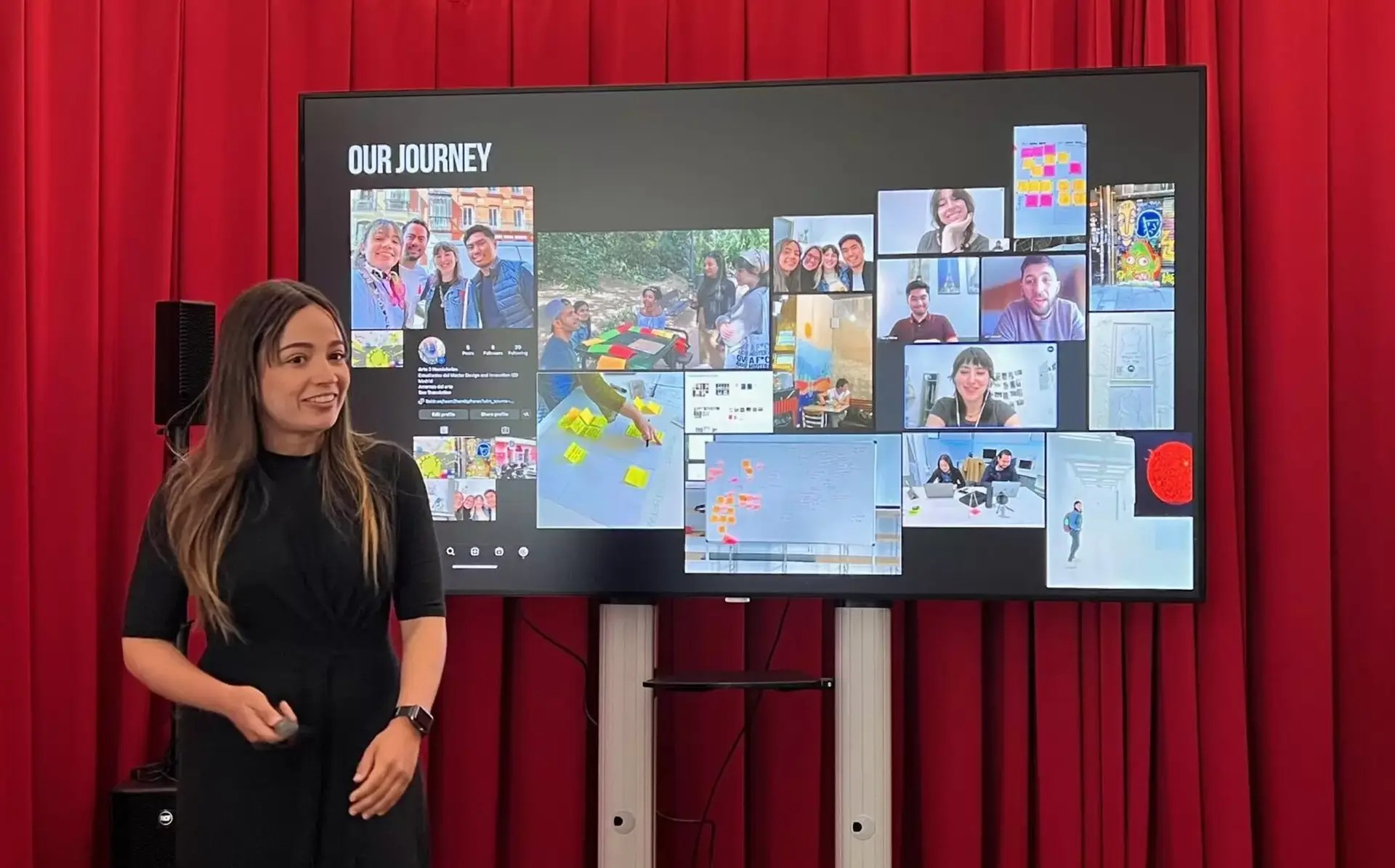
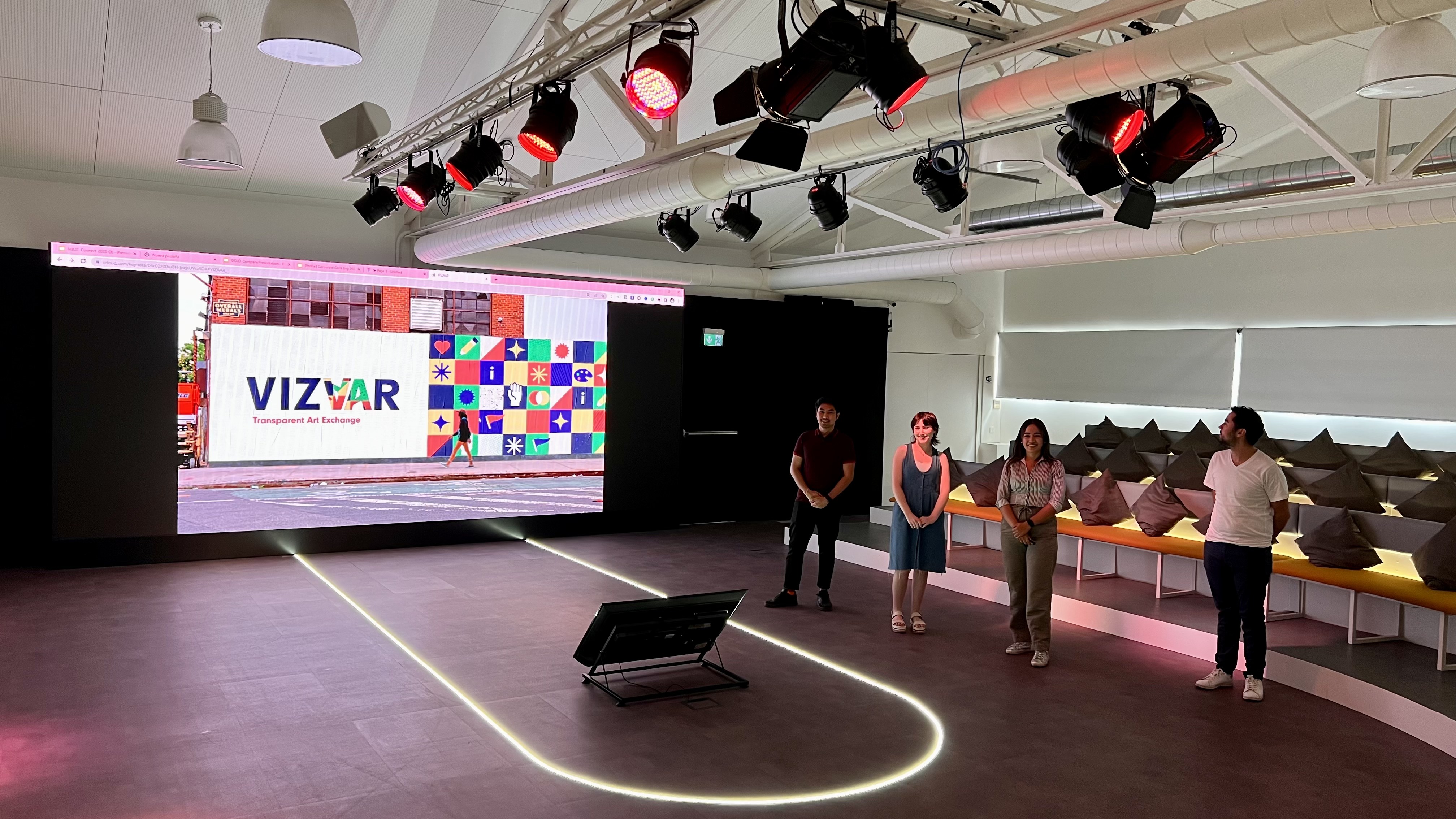
Vizaar emerged from a nine-month group project developed during the Master of Design and Innovation. Together, we explored the global art market before focusing on Madrid’s creative ecosystem, looking closely at the challenges faced by artists and the different stakeholders surrounding them.
Understanding the Ecosystem
The first three months were dedicated to research, data collection and analysis. Our goal was not simply to identify a problem, but to understand the relationships, behaviours and opportunities within the art ecosystem.
The project combined business, strategy, communication and brand design through an iterative process that continuously challenged our initial assumptions.
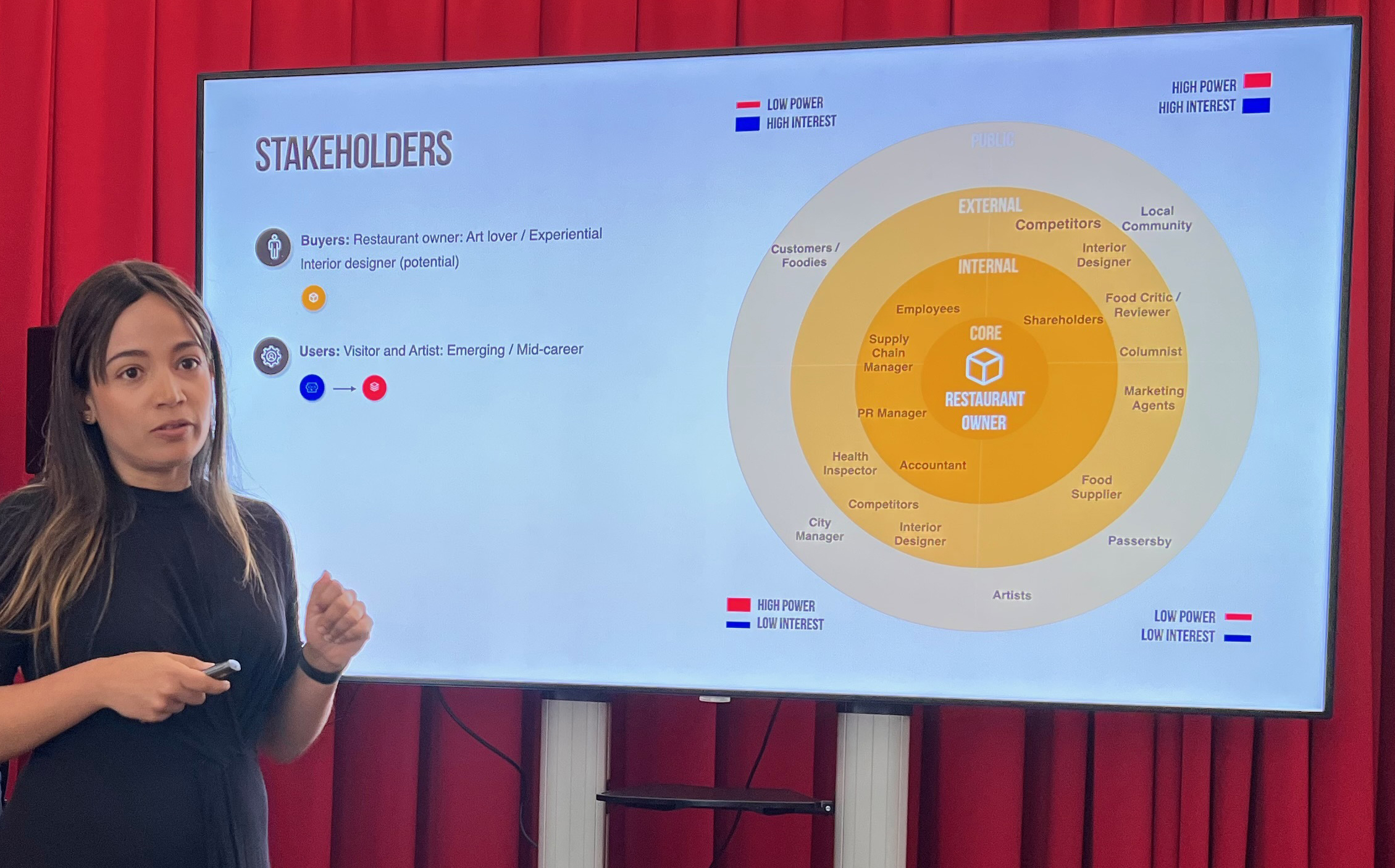
Our first direction focused on restaurant owners as a potential buyer persona. Many restaurants in Madrid use art to shape atmosphere, reinforce identity and create more distinctive experiences. This led us to explore an initial business opportunity connecting restaurant owners looking for art with artists seeking greater visibility and new commercial opportunities.
But research began to reveal something more interesting.
From an Idea to Vizaar
As the project evolved, we realised that connecting artists and restaurants alone did not fully address the opportunity we had uncovered.
We went back to the research, questioned the original proposition and simplified the model.
Through validation and iteration, our focus shifted from the restaurant ecosystem towards the art market itself, eventually identifying art investment as a more viable direction.
This shift became Vizaar — an online platform conceived to make art investment more accessible, allowing users to diversify their portfolios while participating in an asset with the potential to grow in value over time.
Designing Through Iteration
Design Thinking became fundamental to the development of Vizaar. Research helped us understand the complexity of Madrid’s art ecosystem, while continuous iteration gave us the flexibility to adapt the concept as new insights emerged.
Rather than protecting our first idea, we learned to question it.
Each stage — research, validation, experimentation and refinement — helped us move towards a clearer proposition and a stronger relationship between user needs and business viability.
The process also shaped the development of Vizaar’s brand and strategic direction, translating the research into an identity capable of communicating trust, accessibility and a new way of approaching the art market.
Ultimately, Vizaar became an exercise in turning complexity into opportunity.
The most valuable outcome was not simply the final platform, but the process behind it: understanding when to evolve an idea, when to simplify it and when research is telling you to move in an entirely new direction.
Sometimes, design is not about finding the right answer first. It is about building a process that allows the right answer to emerge.






I’m always open to new projects, meaningful, collaborations or a good conversation.
Let’s connect.