HE~GLAM
EcoGlamping Mirador
Hospitality Designed for Nomads |Jarabacoa · Dominican Republic
Student Project by Nelly Caceres, Melaney Ventura & Graciely Guerro Design IX · EAD–PUCMM · Professor: Sarah Tió · Sept-Dec 2021

What if hospitality allowed us to experience nature without disconnecting from it?
HE~GLAM — EcoGlamping Mirador is an academic hospitality project proposed for Jarabacoa, Dominican Republic, exploring how architecture can bring together tourism, nature, wellbeing and environmental awareness.
Developed by architecture students Nelly Caceres, Melaney Ventura and Graciely Guerro during Design IX at PUCMM, the project responds to the opportunity to develop a different model of tourism for Jarabacoa — one centred on short stays, immersive landscapes and a closer relationship between guests and the natural environment.
Rather than approaching the hotel as an object placed within the landscape, the proposal asks how hospitality architecture can become a way of experiencing the landscape itself.
A Different Kind of Stay
Jarabacoa offers a tourism experience very different from the coastal destinations commonly associated with the Dominican Republic.
Mountains, vegetation, rivers, cooler temperatures and extensive natural views define its identity.
HE~GLAM uses these conditions as the foundation of the guest experience.
The project is designed primarily for visitors seeking short stays in relaxing environments, combining the comfort of hospitality with the direct experience of nature associated with glamping.
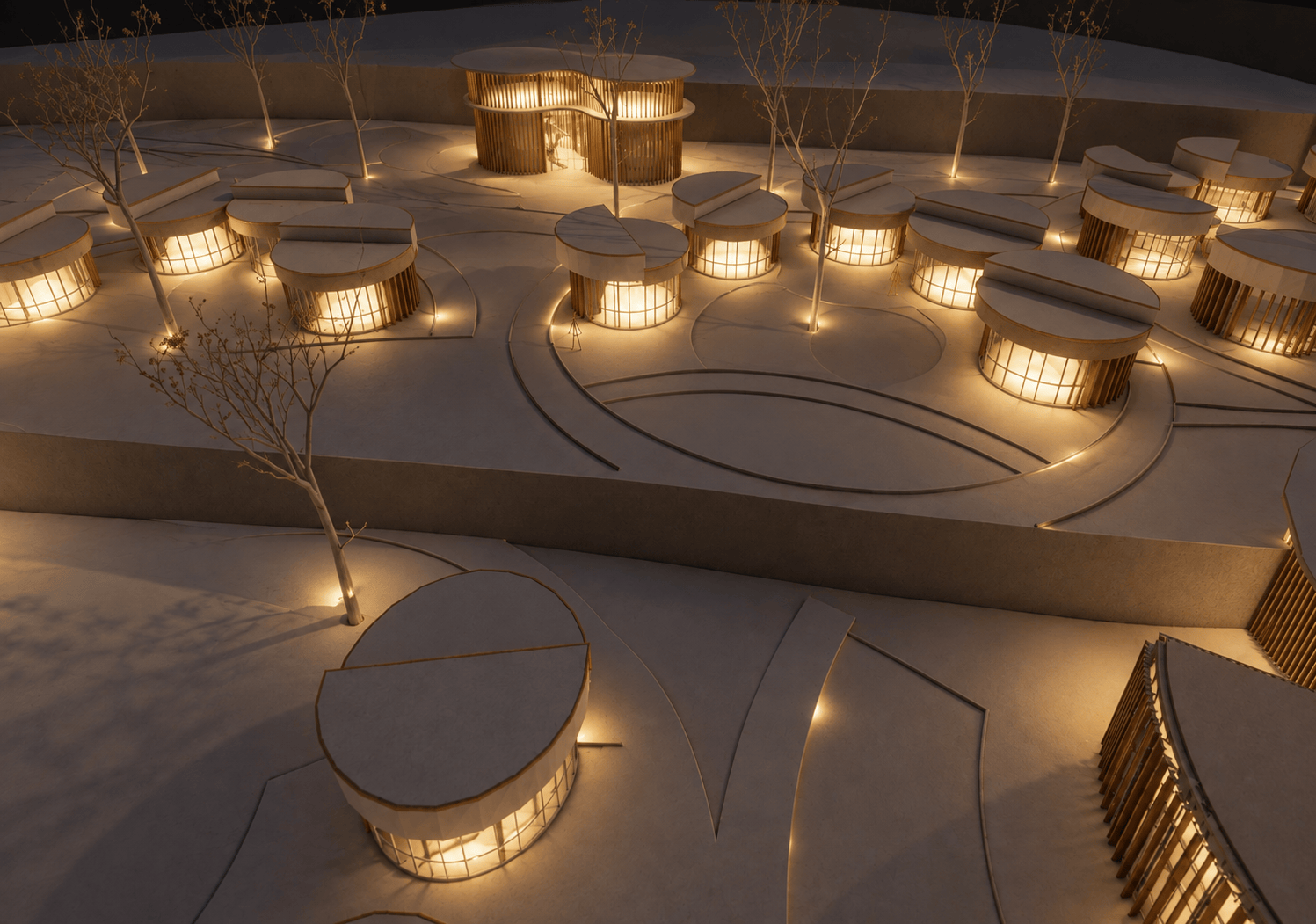
Accommodation, restaurants, recreational areas and viewpoints are distributed throughout the site, creating different opportunities to engage with the landscape.
The objective is not simply to provide a room with a view.
The journey through the landscape becomes part of the stay.
Learning From the Orchid
The architectural concept begins with the orchid, a flower closely associated with the natural environment of Jarabacoa and celebrated through the region’s Festival de las Flores.
Rather than using the flower simply as a formal reference, the students studied its growth, adaptation and relationship with its ecosystem.
The orchid can survive in different environmental conditions and establish relationships with surrounding organisms to support its development.
These characteristics became conceptual principles for the architecture.
Growth. Adaptation. Connection.
The project therefore develops as a collection of architectural elements connected across the landscape rather than as a single conventional hotel building.
Architecture as Growth
The stages of the orchid’s development influenced the organisation and progression of the project.
Different spaces emerge throughout the site and are connected through a continuous system of circulation.
This creates a sequence rather than a single destination.
Guests gradually discover accommodation units, recreational spaces, restaurants and viewpoints while moving through the natural environment.
Architecture becomes almost episodic:
arrive → explore → pause → observe → stay → reconnect.
The experience unfolds through movement.
Glamping & Landscape
The glamping typology allows the project to reconsider the conventional relationship between hotel room and environment.
Rather than separating guests from the exterior through an enclosed hospitality building, accommodation units are positioned to maximise their relationship with views, vegetation and climate.
The intention is to preserve a greater sense of immersion while still providing the comfort expected from a hospitality experience.
Each unit becomes a point from which to experience the surrounding landscape.
Privacy and comfort remain essential, but they coexist with a stronger awareness of where the guest is.
Connected Journeys
Circulation plays an important role in HE~GLAM.
Paths connect the different architectural components and encourage guests to move through the site rather than experiencing the hotel exclusively from one central building.
These routes become opportunities to frame views, encounter vegetation and discover different parts of the project.
The architecture therefore operates as a network of destinations and connections.
This reinforces the idea that the experience of hospitality begins long before entering the room.
The Mirador
The landscape of Jarabacoa makes observation itself an important programme.
Viewpoints are incorporated throughout the project to create places where guests can pause and experience the surrounding mountains and vegetation.
The mirador becomes more than an amenity.
It represents the central ambition of the project: to make the natural environment visible, present and memorable throughout the guest journey.
Architecture frames the landscape rather than competing with it.
Ecotourism & Environmental Awareness
The project also responds to a broader concern surrounding tourism development and the protection of environmentally valuable areas.
The research process considered the Dominican Republic’s biodiversity and the need to develop tourism models that recognise the environmental qualities attracting visitors in the first place.
HE~GLAM therefore explores the possibility of using hospitality as a vehicle for environmental awareness and responsible tourism.
The objective is not simply to increase visitor numbers.
It is to consider how tourism can coexist with the landscape that makes the destination valuable.
Hospitality Closer to Nature
HE~GLAM ultimately proposes a hospitality experience based on a simple idea:
the landscape is not the background of the hotel — it is part of the hotel.
The orchid provides a conceptual model for growth and adaptation.
The site defines the journey.
The accommodation creates moments of immersion.
The pathways establish connections.
And the viewpoints invite guests to stop and observe.
Together, these elements create a project where architecture acts as an intermediary between visitor and nature.
Rather than bringing the landscape into a conventional hotel, HE~GLAM brings the guest out into the landscape.
Project
HE~GLAM — EcoGlamping Mirador
Location
Jarabacoa · Dominican Republic
Students
Nelly Caceres · Melaney Ventura · Graciely Guerro
Concept
Orchid · Growth · Adaptation · Connection
Programme
EcoGlamping · Accommodation · Restaurants · Recreation · Viewpoints · Landscape
Topics
Hospitality Architecture · Glamping · Ecotourism · Landscape · Sustainability · Wellbeing · Nature
Course
Design IX · EAD–PUCMM
Professor
Sarah Tió
Type
Academic Student Project




PLANS
I’m always open to new projects, meaningful, collaborations or a good conversation.
Conectemos.