Global Classroom
PUCMM × Tecnológico de Monterrey |
Dominican Republic × Mexico · 2022

What happens when the classroom expands beyond borders?
In 2022, students from PUCMM in the Dominican Republic and Tecnológico de Monterrey in Mexico came together through an international collaborative learning experience connecting two design courses, two institutions and two different cultural contexts.
Developed within the COIL — Collaborative Online International Learning programme and supported by PUCMM’s Department of International Relations, the initiative connected the Creative Studies — Formal Representation of Space module at Tecnológico de Monterrey with Materials & Construction Techniques II from PUCMM’s Interior Design programme.
The objective was to transform the virtual classroom into a shared international learning environment where students could research, collaborate, design and present together across borders.
One Classroom, Two Countries
The collaboration began with a simple idea:
Students studying related disciplines in different countries could learn not only from their professors, but also from each other.
Rather than developing parallel exercises independently, the two courses were connected through a common academic activity.
Students from the Dominican Republic and Mexico were organised into multicultural teams and asked to work collectively despite differences in location, academic context and culture.
The screen stopped being a limitation.
It became the meeting point between two classrooms.
01 — Meeting Across Borders
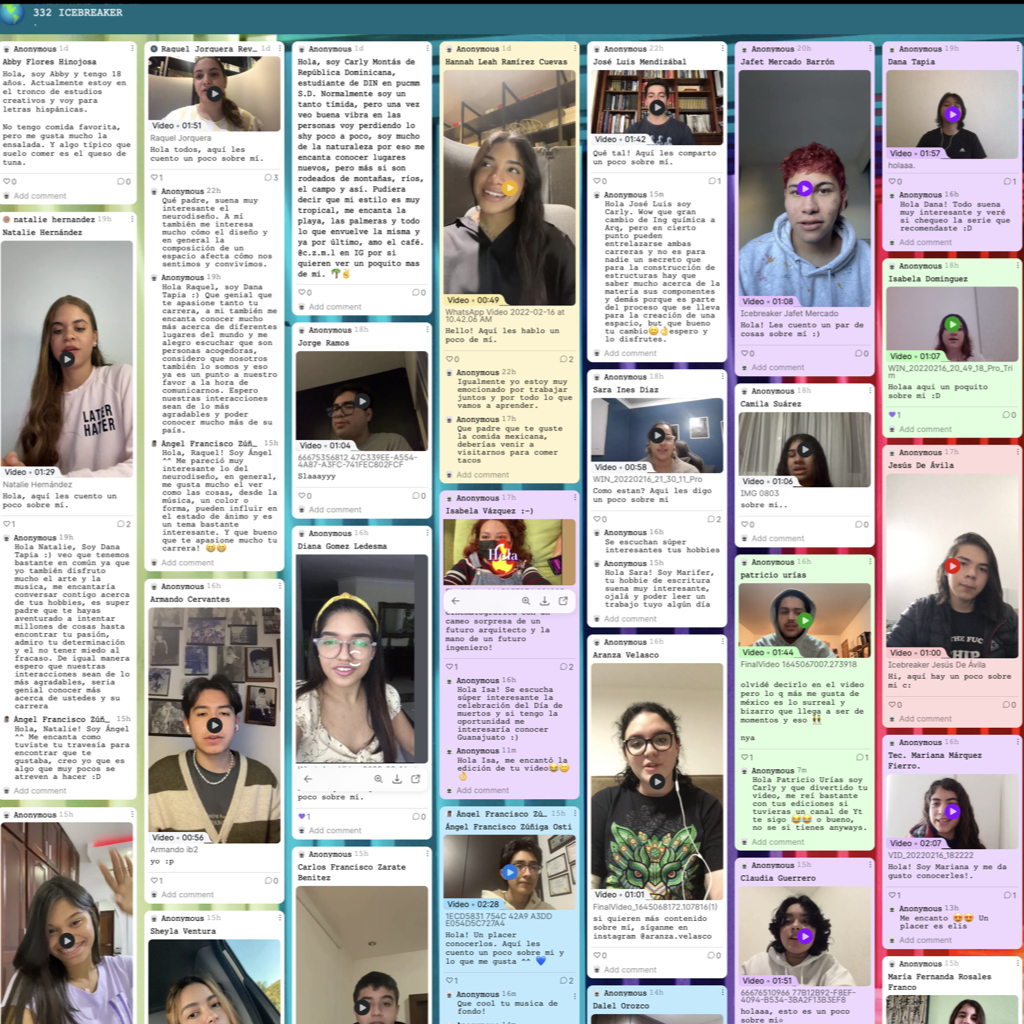
The first phase began online with an introductory session and team-building activities.
Icebreakers helped students become familiar with one another and created a more comfortable environment for collaboration.
Students including Isabela Vázquez, Angel Zúñiga, Raquel Jorquera and Daniel Mercedes shared their expectations for the Global Classroom experience and began discovering the perspectives of classmates studying in another country.
Before collaborating on design, they first needed to establish something more fundamental:
connection.
02 — Building Multicultural Teams
Students were then organised into mixed teams composed of participants from both institutions.
Each group approached a shared research and analysis exercise connected to the objectives of the two courses.
Working with students from another cultural and educational environment introduced different ways of interpreting the same questions.
The exercise therefore became more than an academic assignment.
It became an opportunity to understand how culture, context and individual experience influence the way we observe and design.
03 — Collaborating Asynchronously
The collaboration continued beyond scheduled class time.
Teams remained in contact asynchronously, organising their own communication and coordinating the development of the assigned work across two countries.
This required another set of skills rarely addressed through conventional individual assignments:
communication · organisation · negotiation · responsibility · collaboration
Students needed to make decisions collectively while navigating different schedules, perspectives and ways of working.
The process itself became part of the learning experience.
04 — Presenting as One Team
The project phase concluded with a formal group presentation.
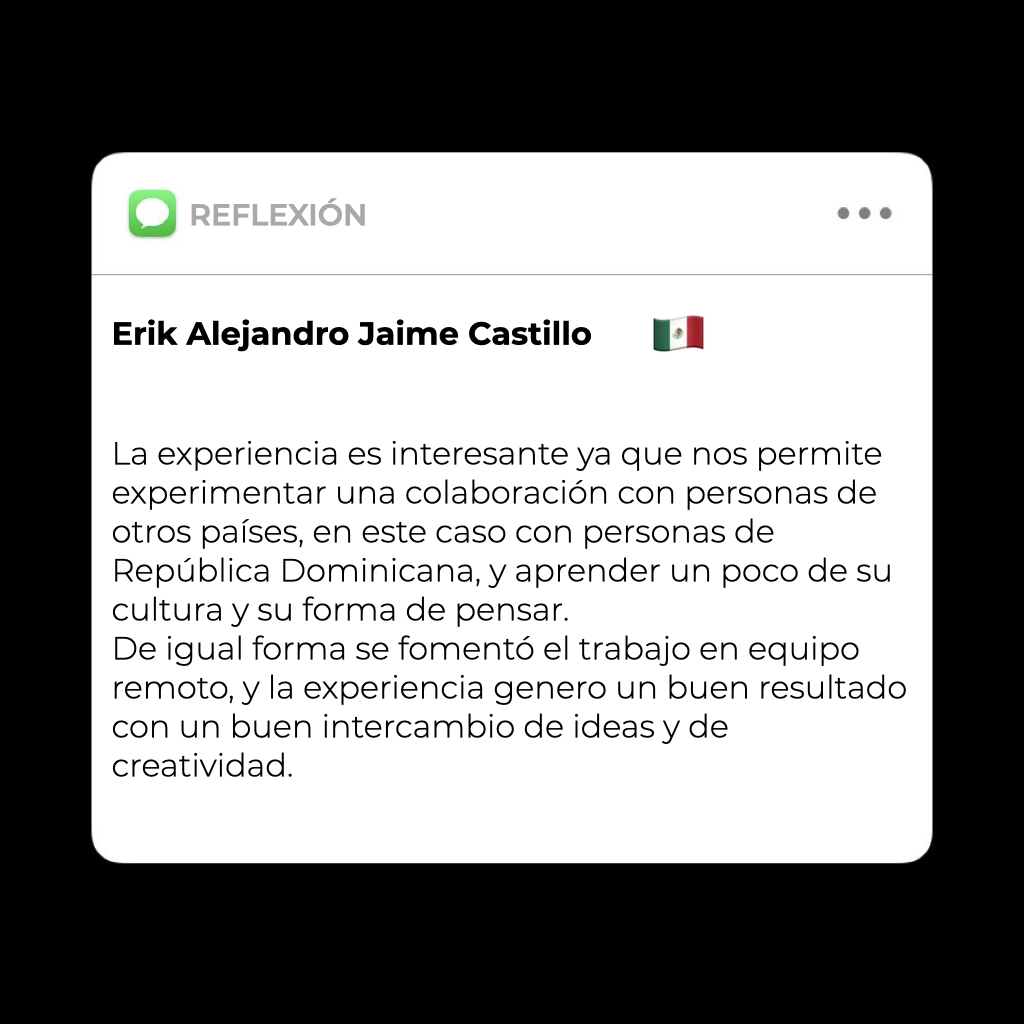
Students who had initially met through screens now presented the results of a project developed collectively between the Dominican Republic and Mexico.
The virtual environment allowed one classroom to enter another.
As student Daniel Mercedes reflected on the experience, one moment he was attending class from home and the next he was virtually presenting his work inside a classroom in Mexico.
That shift in perception captures much of what the Global Classroom intended to achieve.
Distance remained physical, but the learning environment became shared.
05 — Reflecting on the Experience
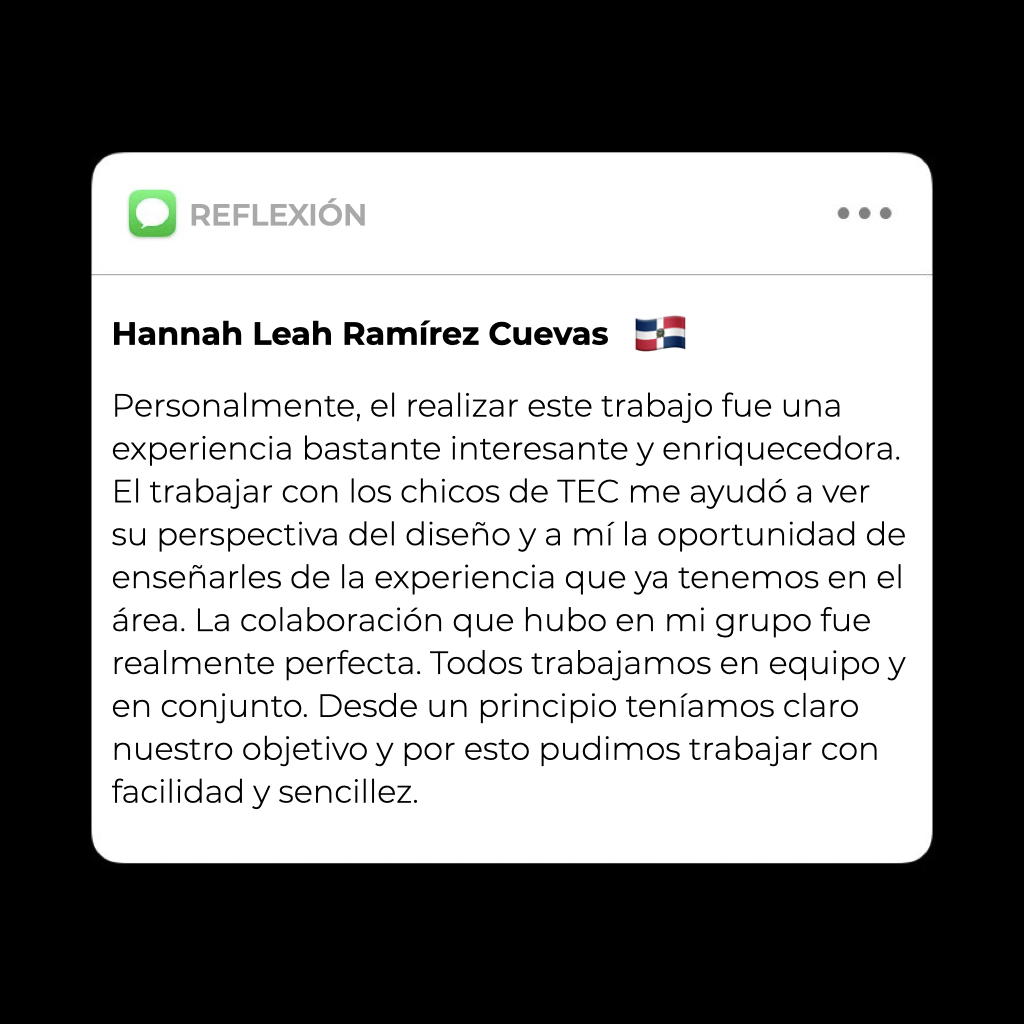
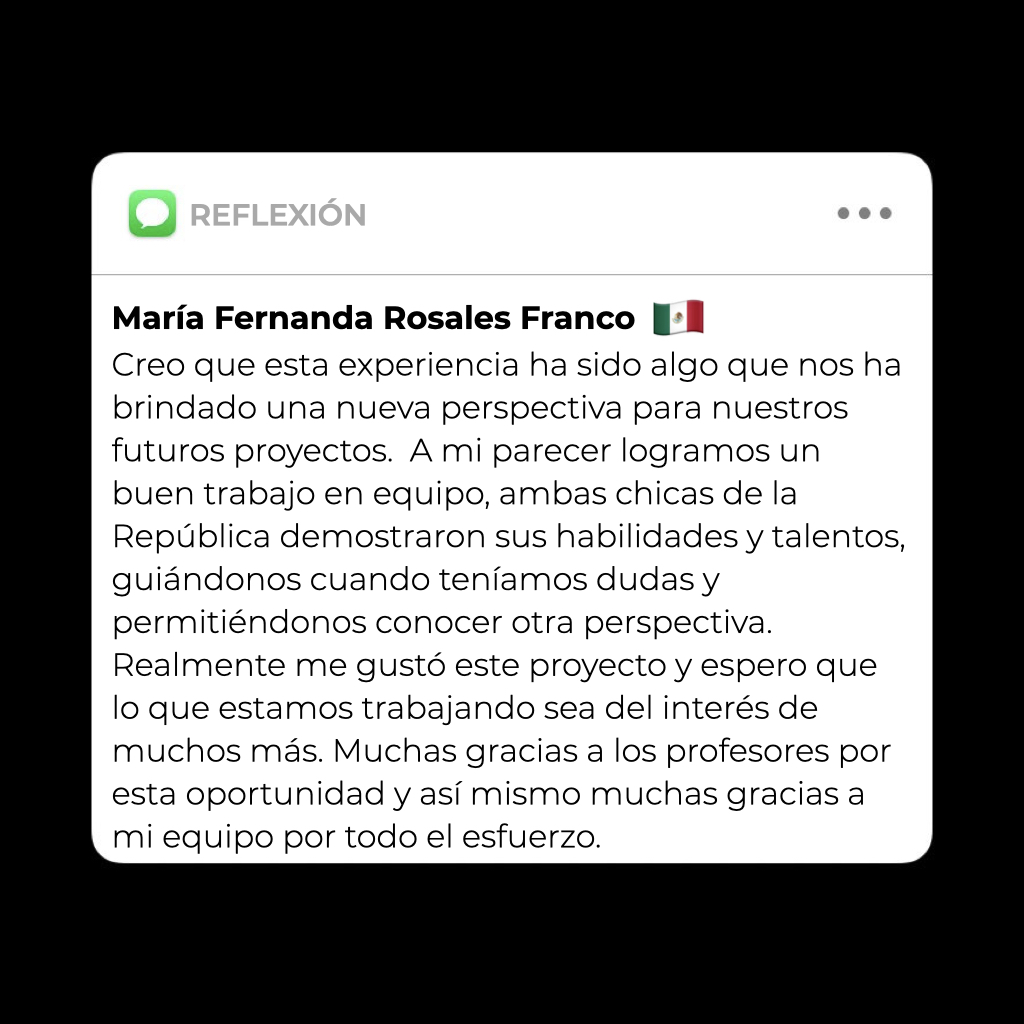
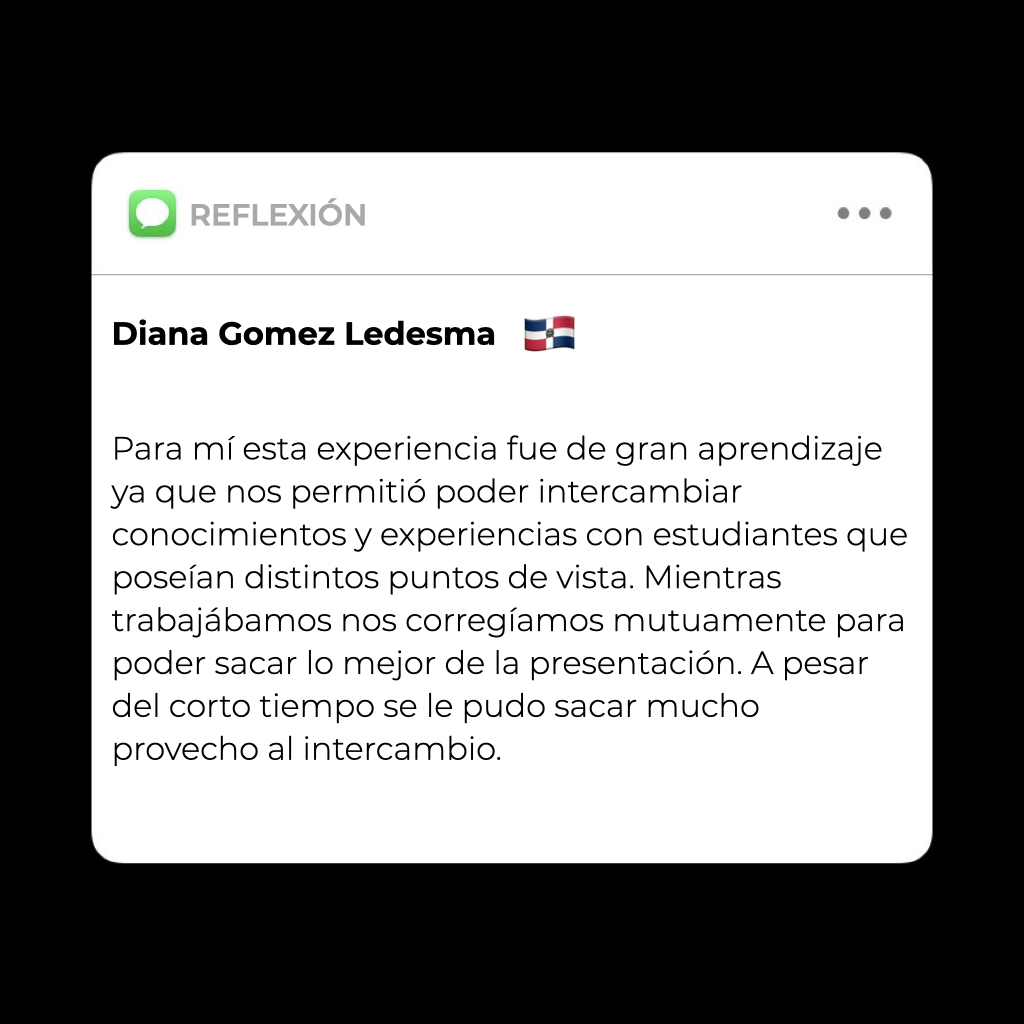
The final stage focused on reflection.
Students considered not only the outcome of the assignment but also what they had learned from the collaborative process itself.
Different perspectives.
Different cultures.
Different academic environments.
And different ways of approaching the same design problem.
These encounters expanded the exercise beyond the technical objectives of either course.
Learning Beyond the Classroom
As an educator, this was the type of experience I would have loved to encounter as a student.
Architecture and design are increasingly developed within international and multidisciplinary environments. Learning how to communicate with people from different backgrounds is therefore not separate from professional education.
It is part of it.
Virtual learning made it possible to transform two geographically distant classrooms into a single collaborative space — allowing students to establish connections, encounter new perspectives and experience another culture without leaving their own classroom.
The project demonstrated that international education does not always require travelling thousands of kilometres.
Sometimes, it begins by simply opening the classroom to someone on the other side of the screen.
Programme
COIL — Collaborative Online International Learning
Collaboration
PUCMM × Tecnológico de Monterrey
Countries
Dominican Republic × Mexico
Year
2022
PUCMM Course
Materials & Construction Techniques II · Interior Design
Tec de Monterrey Course
Creative Studies · Formal Representation of Space
Topics
Design Education · Global Classroom · International Collaboration · Cross-Cultural Learning · Collaborative Design · COIL
Type
Teaching Archive · International Academic Collaboration


I’m always open to new projects, meaningful, collaborations or a good conversation.
Conectemos.