ECO MONT
Inclusive Eco Condo Hotel
Hospitality Designed for Everyone | Monte Cristi · Dominican Republic
Student Project by Charatza Ruiz, Ivanny Bautista & Odelis Caamaño Design IX · EAD–PUCMM · Professor: Sarah Tió · Sept-Dec 2021

What if accessibility were not an addition to hospitality design, but one of the ideas from which the experience begins?
The Inclusive Eco Condo Hotel is an academic hospitality proposal located in Monte Cristi, Dominican Republic, exploring how universal design, sustainability and nature can come together to create a more inclusive tourism experience.
Developed by architecture students Charatza Ruiz, Ivanny Bautista and Odelis Caamaño during Design IX at PUCMM, the project emerged from research into accessibility within the Dominican tourism industry and the opportunity to encourage ecotourism in a region with significant natural potential.
Rather than designing for an assumed standard user and adapting the building afterwards, the proposal begins with a different premise:
Hospitality should be designed for everyone.
Rethinking Inclusive Hospitality
Hotels are fundamentally about experience.
Arrival, movement, orientation, comfort, privacy and access to amenities all influence how a guest perceives a destination.
When accessibility is treated only as a technical requirement, however, that experience can become fragmented.
The Inclusive Eco Condo Hotel explores universal design as part of the architectural concept itself.
Accessible circulation, accommodation and common spaces are integrated into the overall experience rather than separated into specialised solutions.
The objective is not simply to allow different users to access the hotel.
It is to allow them to experience it with the same sense of comfort, independence and dignity.
Why Monte Cristi?
The project is proposed along Avenida San Fernando in Monte Cristi, in the northwestern region of the Dominican Republic.
Unlike the country’s more established resort destinations, Monte Cristi offers an opportunity to explore a different model of tourism — one connected more directly with landscape, ecology and local identity.
The proposal therefore considers the hotel not only as accommodation but as a potential catalyst for the development of inclusive ecotourism within the region.
Nature becomes both the attraction and the foundation of the architectural experience.
Nature as the Starting Point
The natural context forms the central concept of the project.
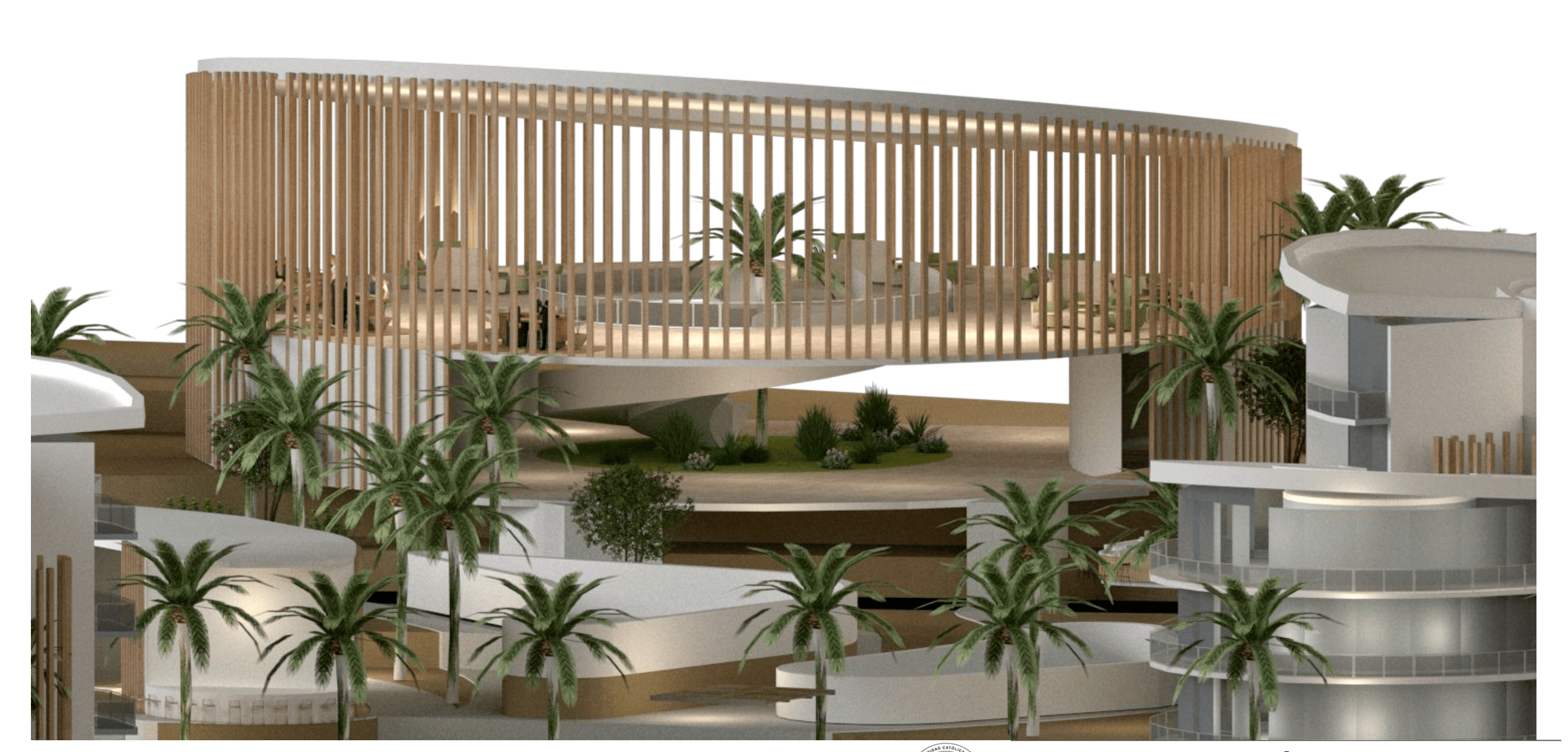
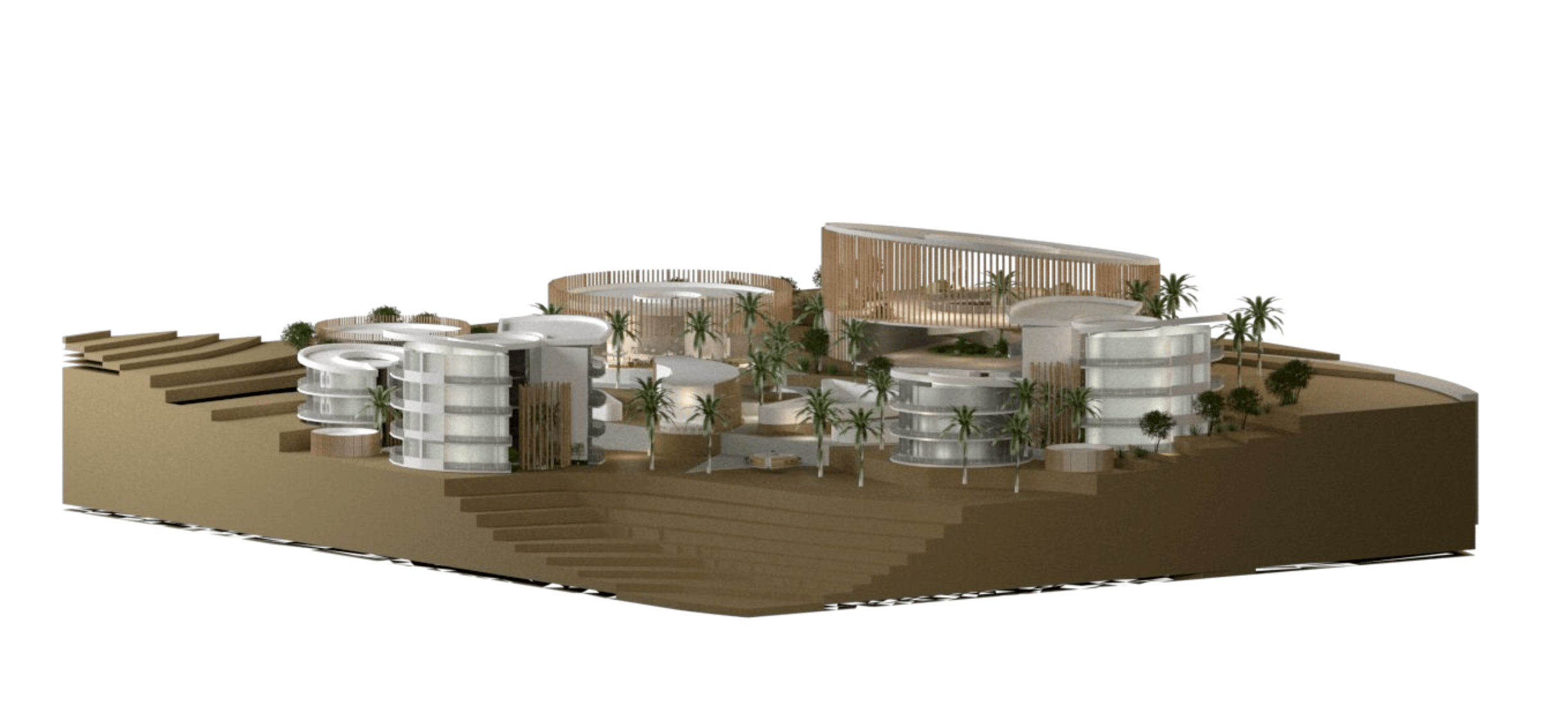
Rather than creating an inward-looking resort disconnected from its surroundings, the architecture establishes continuous relationships between interior spaces, gardens and landscape.
Interior and exterior gardens are integrated throughout the hotel.
Natural light and ventilation become important components of the spatial strategy.
Views and connections with vegetation accompany guests through different areas of the project.
The intention is to create an environment where nature is not simply something visitors travel to see.
It becomes part of everyday life within the hotel.
Universal Design
Inclusivity influences the way guests arrive, move through and experience the project.
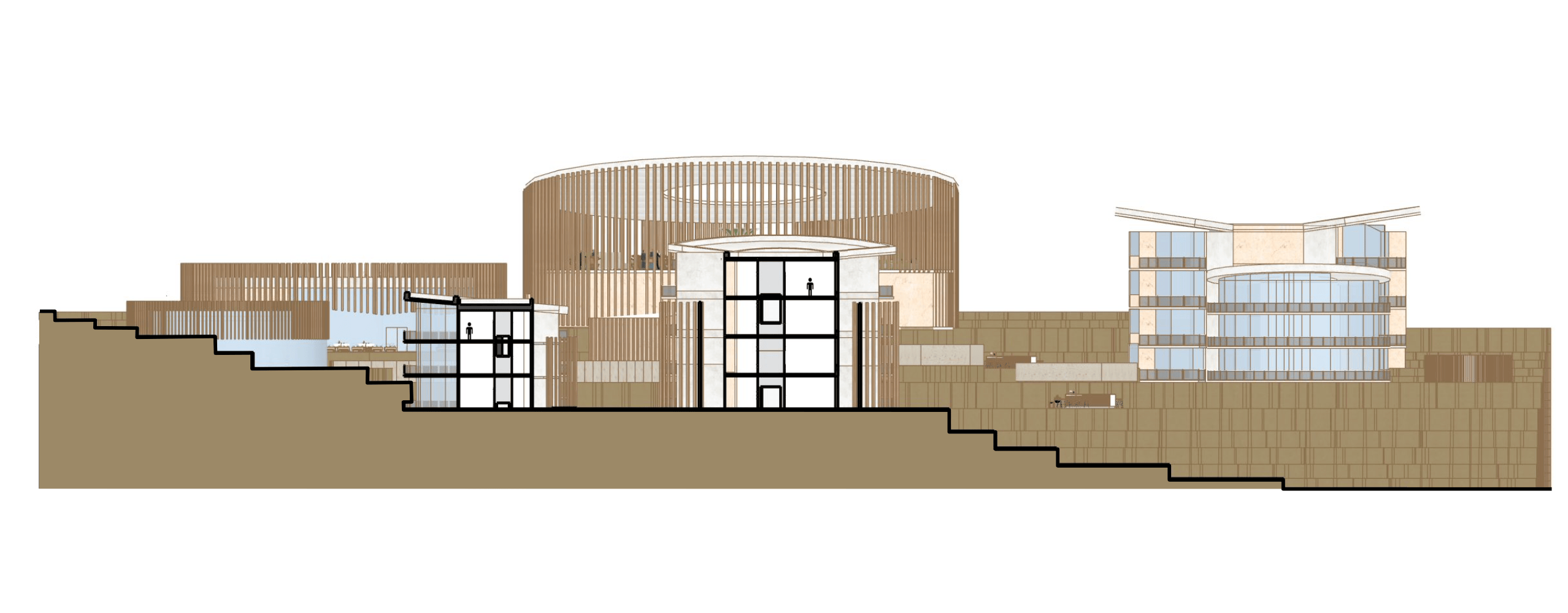
Circulation is designed to accommodate users with different levels of mobility without creating separate or secondary routes.
Transitions between indoor and outdoor spaces consider accessibility as part of the architectural composition.
Guest accommodation and shared amenities are conceived around comfort, usability and independence.
This approach shifts the conversation from designing specifically for disability to designing environments capable of responding to a greater diversity of human bodies and abilities.
Inclusive design becomes better design.
Sustainability & Wellbeing
The environmental strategy of the project is closely connected to the experience of its users.
Natural ventilation and daylight reduce dependence on mechanical systems while creating spaces that feel more connected to their surroundings.
Landscape contributes to thermal comfort and creates moments of shade, rest and interaction.
Material selection responds to the project’s ecological intentions while reinforcing its relationship with place.
The proposal also explored strategies associated with the Living Building Challenge, using the framework as a reference for thinking beyond conventional sustainability measures.
Rather than treating sustainability exclusively as a question of energy performance, the project connects environmental responsibility with health, comfort and wellbeing.
A Different Model of Tourism
The Condo Hotel typology introduces another layer to the project.
Combining hospitality with longer-term residential use creates the possibility of a destination that supports both visitors and residents while contributing to the economic development of the surrounding area.
But the ambition extends beyond increasing tourism.
The project proposes a model in which tourism development can simultaneously consider:
Who can access it?
How does it relate to its environment?
What experience does it create for different users?
And what does it contribute to its destination?
Hospitality Designed Around People & Place
The Inclusive Eco Condo Hotel brings together three ideas that are often treated independently:
Accessibility. Sustainability. Hospitality.
Here, they become part of the same architectural strategy.
Universal design supports independence.
Nature supports wellbeing.
Environmental strategies respond to place.
And hospitality provides the framework through which these elements become an experience.
The result is a proposal for tourism architecture that seeks not only to attract visitors to Monte Cristi, but to create a destination where a broader range of people can participate in that experience.
Inclusive hospitality is not about designing a different experience for some guests. It is about designing a better experience for everyone.
Project
Inclusive Eco Condo Hotel
Location
Monte Cristi · Dominican Republic
Students
Charatza Ruiz · Ivanny Bautista · Odelis Caamaño
Concept
Inclusive Hospitality · Universal Design · Nature
Programme
Condo Hotel · Hospitality · Residential · Landscape · Guest Amenities
Sustainability
Natural Ventilation · Natural Light · Landscape Integration · Living Building Challenge Strategies
Topics
Hospitality Architecture · Universal Design · Inclusive Design · Ecotourism · Sustainability · Wellbeing
Course
Design IX · EAD–PUCMM
Professor
Sarah Tió
Type
Academic Student Project




PLANS
I’m always open to new projects, meaningful, collaborations or a good conversation.
Let’s connect.